
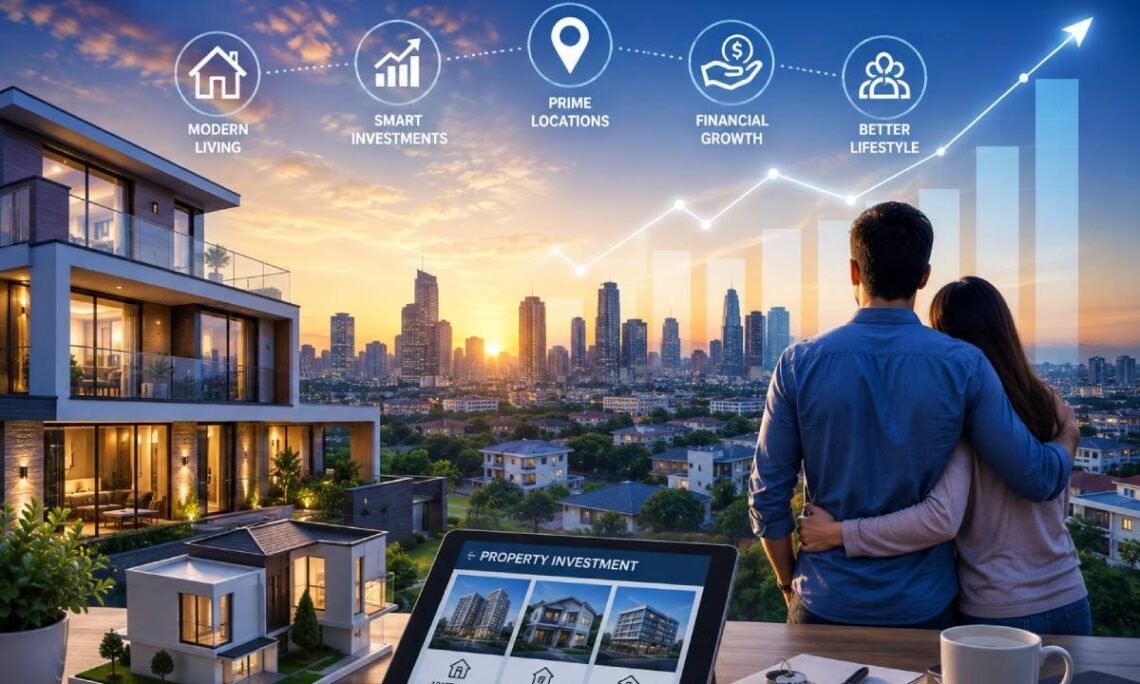
Real estate has always been an important part of personal finance, business development, and urban growth. A home provides shelter and stability, while commercial properties support businesses, offices, retail activity, and employment. Over time, real estate has also become an important investment option for people looking to build long-term wealth.
The property market is continuously changing because of urbanization, infrastructure development, changing lifestyles, technology, interest rates, and evolving buyer preferences. In India, recent market data shows continued residential demand, with premium and luxury housing becoming increasingly important in major cities.
Understanding the Importance of Real Estate
Real estate includes residential properties, commercial buildings, land, industrial spaces, warehouses, and other forms of immovable property.
For individuals, buying a home can be one of the biggest financial decisions they make. For investors, property can provide potential rental income and long-term appreciation, although returns are never guaranteed.
Real estate also contributes to economic activity through construction, infrastructure, financing, property management, architecture, engineering, and many related industries.
Changing Preferences Among Homebuyers
Homebuyers today are looking beyond the basic features of a property. Location, connectivity, amenities, security, lifestyle facilities, environmental considerations, and construction quality can all influence purchasing decisions.
Modern residential projects may include fitness centers, landscaped gardens, community spaces, swimming pools, recreational areas, parking facilities, and technology-enabled security systems.
The growing preference for premium properties is particularly visible in India’s major urban markets. JLL reported that residential sales increased year over year in Q1 2026, with premium housing recording particularly strong growth.
Location Remains a Major Factor
Location continues to be one of the most important considerations in real estate. A property in a well-connected area may have advantages in terms of transportation, employment opportunities, schools, healthcare, shopping, and other facilities.
Infrastructure development can also influence property markets. New roads, metro systems, airports, business districts, and other infrastructure projects can change how people and businesses view particular areas.
However, buyers should not assume that every infrastructure announcement will automatically lead to higher property values. Actual project completion, connectivity, employment growth, and sustained demand are important factors.
The Growth of Premium Housing
Premium and luxury housing has become a major part of India’s residential property market. According to JLL, homes priced above INR 10 million experienced strong growth in Q1 2026, while higher-value segments performed particularly well.
CBRE also reported continued demand across India’s residential market, with high-end and luxury housing gaining traction in major cities.
This trend reflects changing buyer preferences and increased demand from households with greater purchasing power.
At the same time, affordability remains an important concern for many buyers. The property market therefore contains very different segments, from affordable housing to ultra-luxury residences.
Technology Is Transforming Property Search
Technology has changed how people search for homes and commercial properties. Buyers can now explore listings online, compare locations, view photographs, watch virtual tours, and communicate with agents without immediately visiting a property.
Artificial intelligence is also beginning to influence the real estate industry. Developers and construction companies are increasingly exploring AI for areas such as property recommendations, customer service, project planning, supply-chain management, and predictive maintenance.
This can make certain property processes more efficient while providing buyers with more information.
The Rise of Digital Property Marketing
Property marketing has also moved beyond traditional newspapers, brochures, billboards, and physical events.
Real estate businesses increasingly use websites, social media, online advertisements, video tours, search marketing, email campaigns, and digital content to reach potential buyers.
High-quality photographs and videos can help buyers understand a property before arranging a physical visit. Digital marketing can also allow developers and agents to target specific audiences according to location, interests, budget, and property preferences.
Commercial Real Estate Continues to Evolve
Residential property is only one part of the real estate sector. Commercial real estate includes offices, retail spaces, warehouses, industrial facilities, hotels, and other properties.
Changing business models are influencing commercial property requirements. Companies may require flexible offices, technology-enabled workspaces, better employee facilities, and locations close to major transportation networks.
Institutional investment also remains significant in important commercial markets. Recent activity in Mumbai’s Bandra-Kurla Complex demonstrates continued investor interest in premium office assets.
The Importance of Property Research
Buying property requires careful research. A buyer should understand the location, developer or seller, property documents, applicable approvals, maintenance costs, financing requirements, and other relevant factors.
The property’s asking price should also be compared with similar properties in the area. Looking at only one listing can make it difficult to determine whether the quoted price is reasonable.
Professional legal and financial advice can be valuable when dealing with complex transactions.
Understanding Financing and Home Loans
For many buyers, purchasing a property involves financing. Home loans can make property ownership more accessible, but borrowers need to understand interest rates, loan duration, processing charges, repayment obligations, and the total cost of borrowing.
A buyer should consider whether monthly repayments fit comfortably within their financial situation.
It is also important to account for costs beyond the property price. Registration charges, taxes, maintenance, insurance, interiors, parking, and other expenses can add significantly to the overall cost.
Real Estate as a Long Term Investment
Real estate is often viewed as a long-term investment because property values can potentially appreciate over extended periods. Rental properties can also provide income.
However, property is not a guaranteed investment. Prices can vary by location, property type, economic conditions, infrastructure, demand, financing costs, and other factors.
Unlike some financial assets, real estate can also involve significant transaction costs and may take longer to sell.
Investors should therefore consider their financial objectives, risk tolerance, investment horizon, and liquidity requirements before purchasing property.
Sustainability Is Becoming More Important
Environmental considerations are increasingly influencing real estate development. Energy-efficient buildings, better water management, natural lighting, renewable energy systems, waste management, and green spaces can contribute to more sustainable properties.
Sustainable design can also improve operational efficiency in some buildings by reducing energy and resource consumption.
As buyers become more environmentally conscious, properties with thoughtful sustainability features may become increasingly attractive.
The Future of Real Estate
The real estate industry is likely to become more technology-driven and data-focused. Artificial intelligence, virtual property tours, digital transactions, smart buildings, automated customer service, and advanced analytics may become more common.
At the same time, fundamental factors such as location, infrastructure, construction quality, affordability, employment opportunities, and buyer demand will continue to influence property markets.
The strongest real estate markets are likely to be those where technology and innovation are combined with genuine demand and long-term urban development.
Conclusion
Real estate continues to evolve as buyer preferences, technology, infrastructure, and economic conditions change. India’s residential market remains active, while premium housing has become an increasingly important segment in major cities.
For buyers and investors, careful research remains essential. Property decisions should consider location, affordability, documentation, financing, future development, maintenance costs, and long-term objectives.
Technology is making property discovery and marketing more convenient, while AI and digital tools are beginning to influence the industry’s operations.
The future of real estate will likely combine traditional factors with new technology, creating a market that is more connected, data-driven, and focused on changing consumer expectations.
Frequently Asked Questions
Why is real estate important?
Real estate provides homes, workplaces, commercial spaces, industrial facilities, and other essential infrastructure. It can also serve as a long-term investment for individuals and institutions.
What factors influence property prices?
Location, connectivity, infrastructure, demand, supply, property quality, employment opportunities, economic conditions, financing costs, and nearby facilities can influence property prices.
Is real estate a good investment?
Real estate can be a useful long-term investment for some people, but returns are not guaranteed. Location, property type, purchase price, financing, rental demand, and investment duration all matter.
Why is location important in real estate?
Location influences access to transportation, employment, schools, healthcare, shopping, entertainment, and other facilities. It can also affect rental demand and future property value.
Why is premium housing growing?
Changing buyer preferences, higher purchasing power, lifestyle expectations, and demand for better amenities have contributed to the growth of premium and luxury housing in several major Indian cities.
How is technology changing real estate?
Technology is improving property search, digital marketing, virtual tours, customer service, property recommendations, project planning, and other real estate processes.
What should buyers check before purchasing property?
Buyers should research the location, ownership and property documents, approvals, developer or seller, pricing, financing, maintenance costs, and other applicable expenses.
Is buying property better than renting?
The decision depends on income, financial goals, location, expected length of stay, property prices, rental costs, and personal circumstances. Both renting and buying can be appropriate in different situations.
What is commercial real estate?
Commercial real estate includes properties used for business purposes, such as offices, retail spaces, warehouses, industrial facilities, hotels, and other commercial buildings.
What is the future of real estate?
The future is likely to involve greater use of artificial intelligence, digital property platforms, smart buildings, virtual tours, data analytics, and sustainable development while traditional factors such as location and demand remain important.