
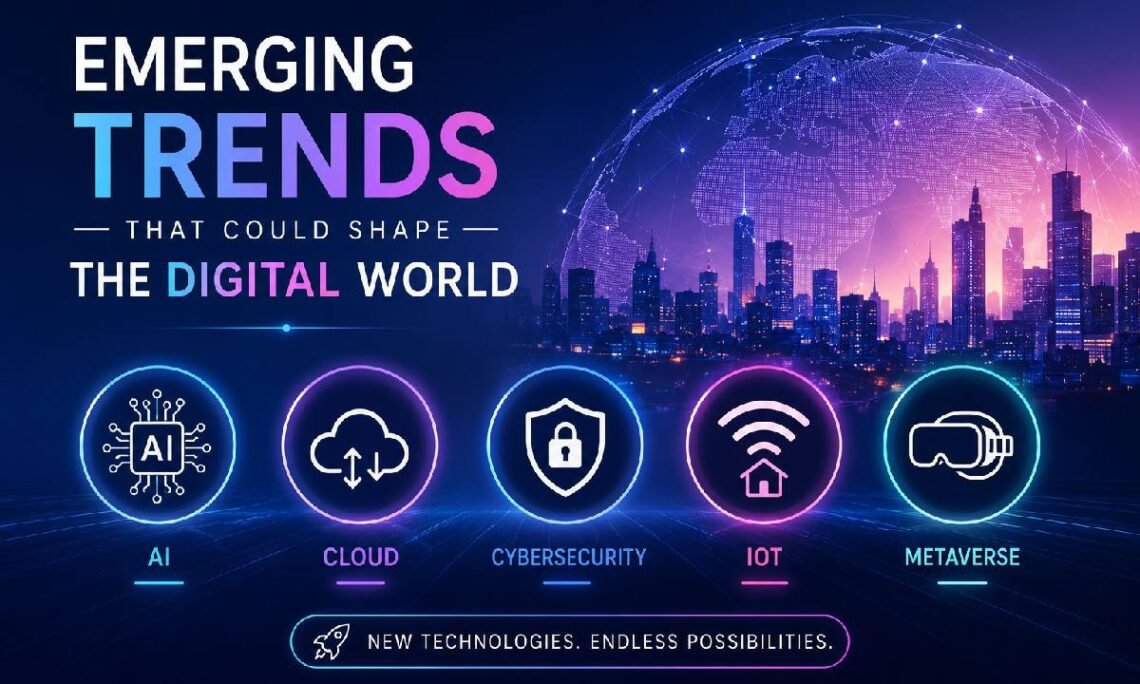
The digital world is changing at an extraordinary pace. New technologies are influencing how people communicate, shop, work, create content, use entertainment, and interact with businesses. At the same time, consumer expectations are changing as people become more comfortable with digital services and increasingly demand convenience, personalization, and value.
Several developments currently gaining momentum could have a significant influence on the years ahead. Artificial intelligence, AI-powered shopping, creator-led discovery, physical AI, digital experiences, and the growing importance of trust are among the trends attracting attention across industries.
Artificial Intelligence Is Moving Beyond Chatbots
Artificial intelligence is increasingly moving from simple question-and-answer tools toward systems capable of completing tasks and supporting more complex workflows.
Forrester’s 2026 emerging technology research highlights agentic software and physical AI as important developments, with AI increasingly moving beyond purely digital environments into areas such as robots, vehicles, and ambient experiences.
This shift could change how people interact with technology. Instead of opening multiple applications and completing every step manually, users may increasingly rely on AI systems to coordinate tasks.
For businesses, this could mean greater automation in customer service, operations, research, marketing, and administration.
AI Could Change How People Shop
Shopping behavior is also being influenced by artificial intelligence. Consumers are increasingly discovering products through social platforms, creators, recommendation systems, and conversational experiences.
Research from McKinsey identifies a new technology-driven path to purchase in which social media and generative AI are becoming increasingly important parts of how consumers discover and evaluate products.
This means the traditional process of searching for a product, visiting a website, and completing a purchase is becoming more complex. Consumers may discover a product through a video, ask an AI tool about it, discuss it through messaging, and then purchase it through a digital platform.
Brands will need to understand this changing journey rather than focusing only on traditional search traffic.
India Is Moving Toward Video First Commerce
India is experiencing particularly strong growth in video-led digital discovery. Meta reports that Reels has become an important channel for discovery, culture, creator engagement, and commerce across India.
This development is significant for businesses because short-form video is no longer limited to entertainment. Product demonstrations, reviews, tutorials, creator recommendations, and brand stories can all influence purchasing decisions.
Small businesses can also benefit because video allows them to demonstrate products and communicate directly with potential customers without relying entirely on traditional advertising.
Messaging Could Become Part of Shopping
Online shopping is also becoming more conversational. Instead of simply browsing product pages, consumers can increasingly interact with brands through messaging platforms.
Meta’s 2026 research on India describes a shift toward a discovery ecosystem driven by AI, Reels, creators, and conversational messaging.
This creates opportunities for businesses to answer questions, provide recommendations, share product information, and support customers within conversations.
The trend could make online shopping feel less like navigating a catalog and more like having a digital conversation with a helpful assistant.
The Experience Economy Is Growing
Another important trend is the increasing interest in experiences rather than only products. Consumers are looking for activities, entertainment, travel, social experiences, dining, events, and other ways to spend time outside the home.
McKinsey’s 2026 consumer research identifies the experience economy as one of the broader trends influencing consumer behavior.
In India, recent reporting has also highlighted growing opportunities around out-of-home experiences as digital businesses look beyond convenience and focus on helping consumers spend their free time.
This could benefit businesses in hospitality, entertainment, travel, food, events, recreation, and local experiences.
Personal AI Assistants Could Become More Common
AI is increasingly being discussed as something that could become more personalized. Instead of using separate tools for individual tasks, people may eventually rely on personal AI systems that understand preferences and help manage everyday activities.
Current technology discussions include AI assistants designed to support areas such as productivity, personal interests, careers, and other daily tasks.
The success of these systems will depend heavily on trust. People may be willing to give AI greater responsibility only when they feel confident about privacy, security, reliability, and control.
AI Is Entering Physical Products
AI is not limited to computers and smartphones. Technology companies are increasingly exploring AI-enabled wearables, vehicles, robots, smart appliances, and other physical products.
Forrester’s research describes this movement as physical AI, where artificial intelligence interacts with the physical world.
Wearable devices could become more intelligent by combining sensors, software, and AI processing. Smart glasses, audio devices, vehicles, and other connected products could provide information or assistance without requiring users to constantly look at a phone.
This could create a new stage of interaction between people and technology.
Businesses Are Moving From AI Experiments to Implementation
Many companies initially approached AI through small experiments and pilot projects. The focus is now increasingly shifting toward practical implementation.
KPMG’s 2026 technology research describes consumer and retail businesses as moving toward broader AI adoption while also investing in data foundations, cybersecurity, and other emerging technologies.
This transition is important because implementing AI successfully requires more than purchasing software. Businesses need reliable data, suitable processes, employee training, security measures, and clear objectives.
Companies that use AI without understanding these foundations may struggle to achieve meaningful results.
Digital Trust Will Become More Important
As technology becomes more powerful, trust becomes increasingly important. Consumers need confidence that digital services are secure, accurate, transparent, and responsible.
AI-generated content can make it more difficult to determine whether images, videos, reviews, or information are genuine. Businesses therefore have an opportunity to differentiate themselves through transparency and authenticity.
Clear communication about how technology is used can help customers understand what they are interacting with and why certain information is being requested.
Human Creativity Still Matters
Technology may automate many tasks, but creativity remains important. Businesses need people who can develop ideas, understand audiences, communicate effectively, solve problems, and make thoughtful decisions.
The growing use of AI may actually increase the value of certain human abilities. When routine production becomes faster, the ability to choose the right idea and understand its purpose can become more important.
The future is therefore unlikely to be simply about humans versus technology. In many industries, the stronger model may involve people and intelligent tools working together.
What Businesses Should Watch
Businesses should pay attention to how consumers discover products, communicate with brands, and make purchasing decisions.
Video, social media, AI recommendations, messaging, creator content, personalized experiences, and offline activities are increasingly connected.
Rather than adopting every new technology simply because it is popular, businesses can focus on technologies that solve real customer problems and improve measurable outcomes.
Conclusion
The digital world is entering another period of rapid transformation. Artificial intelligence is moving into physical products, shopping is becoming more conversational, short-form video is influencing commerce, and consumers are showing greater interest in experiences.
At the same time, businesses are moving from AI experimentation toward practical implementation and stronger digital foundations.
The most important trend may be adaptability itself. Technology will continue to change, but organizations and individuals that remain willing to learn, experiment, evaluate results, and adjust their strategies can be better prepared for what comes next.
Frequently Asked Questions
What are the biggest digital trends right now?
Major trends include artificial intelligence, agentic software, AI-powered shopping, short-form video, conversational commerce, personalized digital experiences, physical AI, and the growing importance of digital trust.
How is AI changing online shopping?
AI can influence product discovery, recommendations, customer support, search, personalization, and purchasing decisions. Consumers may increasingly use AI tools to research products before buying.
Why is short-form video important?
Short-form video provides a fast way to discover products, entertainment, creators, information, and trends. It can also influence purchasing decisions through demonstrations and recommendations.
What is conversational commerce?
Conversational commerce involves using messaging, chat, AI assistants, or other conversational tools to help consumers discover products, ask questions, receive recommendations, and complete purchases.
What is physical AI?
Physical AI refers to artificial intelligence being integrated into physical systems such as robots, vehicles, wearables, and other devices that interact with the real world.
Why is digital trust becoming important?
As AI-generated and digitally manipulated content becomes more common, consumers need greater confidence that information, products, reviews, and digital services are authentic and secure.
Will AI replace human creativity?
AI can assist with many creative tasks, but human judgment, ideas, emotional understanding, communication, and decision-making remain important. Collaboration between people and AI may become increasingly common.
Why is the experience economy growing?
Consumers are increasingly interested in activities and experiences such as travel, entertainment, dining, events, and social activities rather than focusing only on physical products.
How can small businesses benefit from new trends?
Small businesses can use short-form video, social media, messaging, AI tools, online payments, personalized communication, and digital marketing to reach customers and improve their operations.
What should businesses focus on when adopting new technology?
Businesses should focus on solving real customer or operational problems, protecting data, training employees, measuring results, and choosing technology that provides practical value rather than following trends simply because they are popular.