
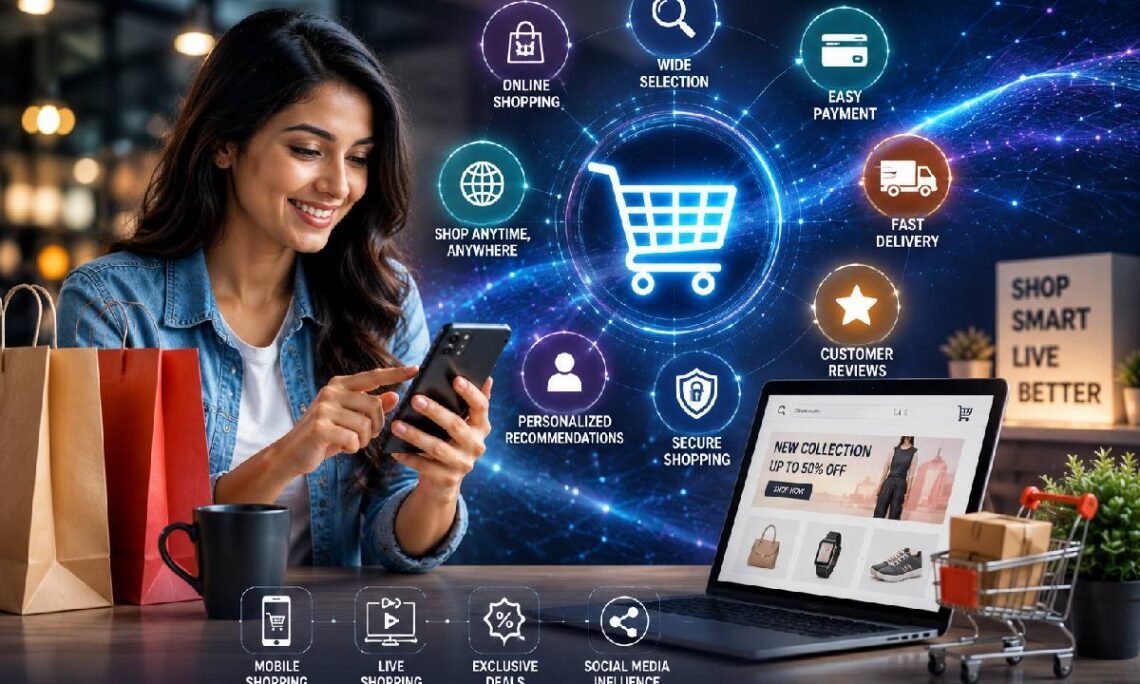
Shopping has always been an important part of everyday life, but the way people discover, compare, and purchase products has changed dramatically. Traditional markets and physical stores continue to play an important role, while websites, mobile applications, social media, quick commerce, and digital payment systems have created new ways to shop.
Consumers today have more choices than ever before. They can compare products from different sellers, read reviews, watch demonstrations, check prices, communicate with brands, and complete purchases from their smartphones.
In India, shopping is increasingly becoming a combination of online discovery and offline experiences. Research and industry reports point toward stronger integration between social media, artificial intelligence, messaging, physical stores, and e-commerce.
The Growth of Online Shopping
Online shopping has made it possible to purchase products without visiting a physical store. Customers can browse clothing, electronics, groceries, furniture, beauty products, household items, and many other categories from their phones or computers.
One major advantage is convenience. Shoppers can explore products at almost any time and compare several options before making a decision.
Online shopping has also expanded access for consumers outside major metropolitan areas. According to PwC India, millions of consumers in tier-2, tier-3, and tier-4 cities have become regular online shoppers, partly because digital platforms provide access to products that may not always be available locally.
Social Media Is Becoming a Shopping Destination
Social media is no longer used only for entertainment and communication. It has become an important part of product discovery.
People can discover clothing, accessories, beauty products, food items, home products, gadgets, and other products through short videos, creators, advertisements, and recommendations.
Meta’s 2026 research on India describes a shift from traditional search-based shopping toward discovery through social feeds, creators, video, AI, and messaging.
This means consumers may discover a product before they even realize they are looking for it.
Short Videos Are Influencing Buying Decisions
Short-form video has become one of the most influential formats in digital shopping. A product can be demonstrated within seconds, allowing consumers to see how it looks, works, or fits into everyday life.
Fashion creators can demonstrate clothing combinations, technology creators can review gadgets, and home creators can show how products are used.
This type of content can make shopping more visual and interactive than traditional product listings.
Meta reports that video-led discovery is playing an increasingly important role in India’s shopping journey, with creators and short-form content helping consumers move from inspiration toward purchase.
Artificial Intelligence Is Changing Shopping
Artificial intelligence is becoming increasingly involved in online shopping. AI can help recommend products, personalize content, answer customer questions, improve search results, and support businesses with marketing and customer service.
Instead of showing every customer the same products, online platforms can use data and AI systems to provide recommendations based on interests and previous interactions.
For shoppers, this can make product discovery faster. However, consumers should still compare products independently and avoid making decisions solely because an algorithm recommends something.
Messaging Is Becoming Part of Commerce
Messaging applications are increasingly being used by businesses to communicate with customers. Consumers can ask questions, receive product information, get personalized recommendations, confirm orders, and request support through conversations.
Meta’s 2026 India shopping research highlights messaging as an important part of the modern shopping journey, particularly through WhatsApp.
This can make shopping feel more personal because customers can communicate directly with businesses rather than navigating only through traditional websites.
The Importance of Customer Reviews
Reviews remain one of the most useful tools for online shoppers. Before purchasing an unfamiliar product, many consumers look at ratings and customer feedback.
Reviews can provide information about product quality, durability, sizing, packaging, delivery, and overall experience.
However, shoppers should not rely on ratings alone. It can be useful to read several detailed reviews, compare different sellers, examine product specifications, and check whether the feedback appears genuine.
A large number of reviews does not automatically guarantee that a product is suitable for every customer.
Comparing Prices Before Buying
One of the biggest advantages of online shopping is the ability to compare prices.
The same product may be available from different sellers at different prices. Discounts, shipping charges, payment offers, warranties, return policies, and delivery times can also affect the actual value of an offer.
A lower listed price is not always the best deal. Consumers should consider the complete purchase cost and the reliability of the seller.
Price comparison can also help shoppers avoid impulsive purchases by giving them time to evaluate alternatives.
Quick Commerce Is Changing Everyday Shopping
Quick commerce has changed expectations around delivery speed, particularly for groceries, household products, personal care items, and other frequently purchased goods.
Consumers in many cities can now receive certain products much faster than traditional e-commerce delivery models.
The growth of quick commerce is also influencing retail competition. Businesses are increasingly considering how speed, convenience, product availability, and location affect customer decisions.
At the same time, consumers should consider whether immediate delivery is actually necessary before paying extra for convenience.
Physical Stores Still Matter
Despite the growth of online shopping, physical stores remain important. Customers often want to see, touch, test, or try certain products before purchasing them.
Fashion, furniture, electronics, beauty products, and luxury goods can particularly benefit from physical experiences.
Modern shopping is therefore becoming increasingly omnichannel. Customers may discover a product online, visit a physical store to examine it, and then purchase it through a website or application.
The opposite can also happen when someone sees a product in a store and later searches online for a better price.
Personalized Shopping Experiences
Consumers increasingly expect shopping platforms to understand their interests. Personalized recommendations can help shoppers discover products that match their preferences.
Personalization can be useful when it reduces the time needed to find suitable products. However, shoppers should remain aware that personalized recommendations are based on data and algorithms.
Businesses need to balance personalization with transparency and responsible handling of customer information.
The Rise of Value Conscious Shopping
Consumers are becoming increasingly careful about how they spend money. Rather than focusing only on discounts, shoppers may consider product quality, durability, reviews, return policies, warranties, and long-term value.
This is particularly important for expensive purchases.
A product that costs slightly more but lasts longer may provide better value than a cheaper alternative that needs to be replaced frequently.
Smart shopping therefore involves looking beyond the headline price.
Sustainable Shopping Is Gaining Attention
Environmental concerns are influencing some shopping decisions. Consumers may consider reusable products, durable goods, second-hand items, recyclable packaging, and brands with more responsible production practices.
Sustainable shopping does not necessarily mean buying only environmentally marketed products. One simple approach is to purchase products that are genuinely needed and use them for as long as possible.
Reducing unnecessary purchases can also help reduce waste.
Shopping Is Becoming More Experience Driven
Shopping is increasingly connected with entertainment, social interaction, and experiences. Consumers may visit shopping centers not only to purchase products but also to eat, watch movies, attend events, socialize, or explore new experiences.
Recent reporting on India’s consumer economy points toward growing interest in out-of-home experiences and a broader shift from pure convenience toward spending time outside the home.
This creates opportunities for retailers to make physical shopping environments more engaging.
Smart Shopping Habits for Consumers
Good shopping habits can help consumers make better purchasing decisions. Planning purchases, comparing prices, reading reviews, checking return policies, and avoiding unnecessary impulse buying can all improve the shopping experience.
For expensive products, consumers should take additional time to research specifications, warranties, maintenance requirements, and alternative options.
The goal is not to avoid spending money. It is to spend money intentionally on products that provide genuine value.
The Future of Shopping
The future of shopping will likely combine online platforms, physical stores, social media, artificial intelligence, messaging, quick delivery, digital payments, and personalized experiences.
Consumers may increasingly discover products through videos and creators, ask AI-powered tools for recommendations, communicate with brands through messaging, and choose between home delivery and physical shopping depending on their needs.
Technology will continue to change the shopping journey, but fundamental consumer expectations will remain important. People want good products, fair prices, convenience, reliable service, and trustworthy businesses.
Conclusion
Shopping has moved far beyond the traditional experience of visiting a store and selecting a product from a shelf. Consumers now have access to digital marketplaces, social commerce, AI-powered recommendations, short-form videos, messaging, quick delivery, and physical retail experiences.
The biggest change is that shopping is becoming more connected. Discovery, research, communication, payment, delivery, and customer service can all happen across multiple platforms.
For consumers, this creates more choices and convenience. For retailers, it creates new opportunities to understand customers and provide better experiences.
The future of shopping will likely belong to businesses that combine technology with trust, convenience, quality, and genuine customer value.
Frequently Asked Questions
Why is online shopping becoming popular?
Online shopping provides convenience, product variety, price comparison, reviews, multiple payment options, and home delivery, making it easier for consumers to purchase products.
How is social media changing shopping?
Social media allows consumers to discover products through creators, short videos, advertisements, recommendations, and communities before visiting a traditional shopping platform.
How does AI help shoppers?
AI can provide product recommendations, improve search results, personalize shopping experiences, answer questions, and help consumers discover products that match their interests.
Why are customer reviews important?
Reviews can provide information about product quality, usability, sizing, durability, delivery, and customer experience. They can help shoppers make more informed decisions.
What is quick commerce?
Quick commerce refers to digital shopping services designed to deliver certain products very quickly, particularly groceries, household items, and everyday essentials.
Is physical shopping still relevant?
Yes. Physical stores allow customers to see, touch, test, and try products. Many consumers now combine online and offline shopping depending on the product and situation.
What is omnichannel shopping?
Omnichannel shopping connects different shopping channels such as physical stores, websites, mobile applications, social media, and messaging platforms to create a more connected customer experience.
How can shoppers avoid unnecessary purchases?
Creating a shopping list, comparing alternatives, waiting before making non-essential purchases, checking existing products at home, and considering long-term value can help reduce impulse buying.
Is the cheapest product always the best choice?
No. Price is only one factor. Quality, durability, warranty, reviews, return policies, delivery costs, and long-term usefulness can also determine whether a product provides good value.
What is the future of shopping?
Shopping is likely to become increasingly connected through AI, short-form video, social commerce, messaging, personalized recommendations, quick delivery, digital payments, and integrated online and offline experiences.